
THE IMPACT
- Mollusc species (historic study): 230 (opens in a new tab)
- Mollusc species (historic study)
- Growth per year: 1–2 cm (opens in a new tab)
- Growth per year
- First protected: 1984 (opens in a new tab)
- First protected
Mollusc species in sampled colonies, not fish species and not a current census.
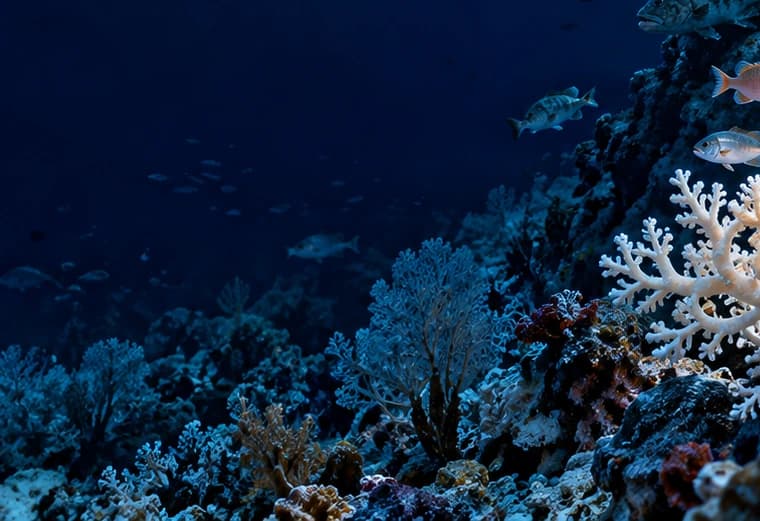
CORAL LOSS
Bottom gear such as trawls, longlines, fish traps and dredges was prohibited in the area because of the damage these gear types were having on the fragile coral.
Source for this fact (opens in a new tab)Where gear contacts fragile coral, branches can break into rubble.
Coral and bottom gear background (opens in a new tab)Oculina coral grows extremely slowly, about 1 to 2 centimeters per year.
Source for this fact (opens in a new tab)FISHERIES
Spawning aggregations of gag and scamp grouper have been observed associated with Oculina colonies.
Source for this fact (opens in a new tab)In July 2022 NOAA disapproved an earlier request, Coral Amendment 10, finding it did not adequately show how it would minimize adverse effects on essential fish habitat and minimize bycatch.
Source for this fact (opens in a new tab)ECONOMY
NOAA states its rationale for the proposed action:
The proposed action is intended to increase access to historic rock shrimp fishing grounds to optimize yield in the rock shrimp fishery, while maintaining protection to deep-water corals.
NOAA's stated rationale (opens in a new tab)
The public can comment on the proposed trade-off between access to historic rock shrimp fishing grounds and protection for deep-water coral.
Read the proposal and comment request (opens in a new tab)OUR FUTURE
Oculina coral grows extremely slowly, about 1 to 2 centimeters per year.
Source for this fact (opens in a new tab)36 days remaining. Public comments due November 17, 2026.
Official comment notice (opens in a new tab)